
Afro and textured hair care in Cambridgeshire: finding a stylist who actually understands your hair
Too many clients with Afro-Caribbean and textured hair have been turned away or badly served by salons that did not know what to do. Here is how I approach textured hair, what a good appointment should feel like, and what I will tell you honestly.
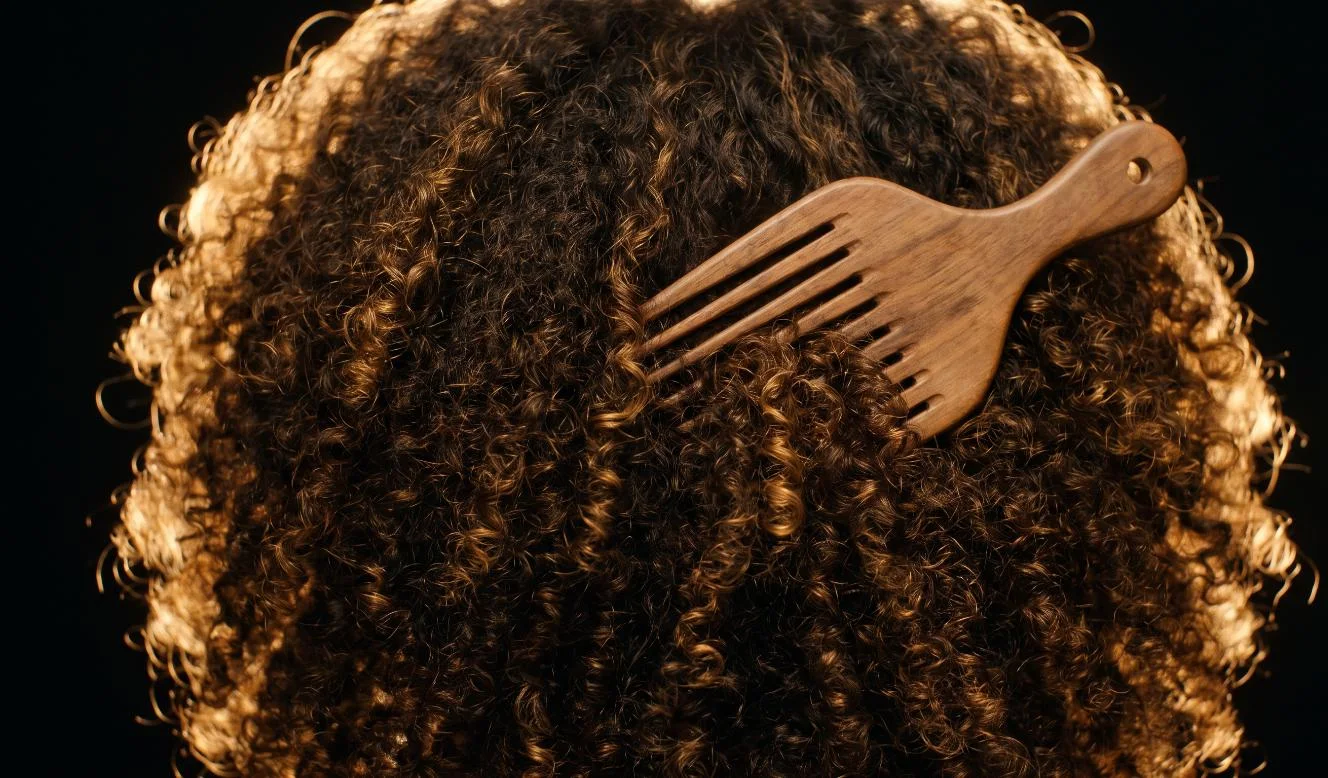
One of the first things clients with Afro-Caribbean hair tell me is a story about another salon. The stylist who looked nervous. The one who suggested relaxing it before they had even asked what the client wanted. The one who said "we don't really do that hair here." In a county as spread out as Cambridgeshire, finding a hairdresser who is confident with textured hair can mean an hour's drive to London or Peterborough, or a search that ends in giving up and doing it yourself.
I have worked with Afro-Caribbean, mixed and Asian hair for the whole of my twenty-year career, through salon work and now from my home salon in Yelling and on home visits across the county. I want to explain how I approach it, so you know exactly what you are booking before you get in the chair.
Why so many salons get it wrong
It is rarely malice. It is training. A lot of UK hairdressing education has treated textured hair as a specialism rather than as hair, so a stylist can qualify, work for a decade and never once cut a coil. Faced with a client whose hair behaves nothing like the hair they practised on, they do the thing people do when they are out of their depth: they hedge, they suggest something safer, or they say no.
The result is that clients with textured hair carry a low expectation into every appointment. It is why the first ten minutes with me are spent listening rather than selling.
The consultation is longer, on purpose
Textured hair is not one thing. Curl pattern, density, porosity and the history of what has been done to it all change what will work, and two people with hair that looks identical in a photograph can need entirely different appointments.
So we talk first. How you wear it day to day. Whether you are natural, relaxed, transitioning or somewhere in between. What is currently in your routine and what you have quietly given up on. Whether you protective style, and how often. What you want more of: definition, length retention, a shape that grows out well, less breakage at the edges.
Then I look at the hair properly, dry first and then wet, because textured hair tells you completely different things in each state. Dry, I can see the shape, the shrinkage and where the density sits. Wet, I can see the true length, the porosity and how much the curl pattern varies across your head, which on most people is a lot.
Only then do I suggest anything. If what you want and what your hair will do are different things, I will say so kindly and tell you what will get you closest.
Cutting
I cut curly and coily hair in the state you wear it. That means dry, in its natural pattern, so the shape is right when you leave and not just while it is stretched and wet. Cutting textured hair wet and hoping for the best is how people end up with a shape that looks nothing like it did in the mirror at the basin.
Layers go where they will encourage the curl rather than fight it. I work with the shrinkage rather than pretending it is not there, so if you are expecting three inches to come off and only see one, that is the shrinkage doing what it does, and I will show you before I cut.
I take my time. A good curly cut should make wash day easier rather than harder, and you should be able to wash it, apply your products and let it dry without needing to fix anything.
Moisture and strength: the two things that are not the same
Textured hair is dry by nature. The natural oils your scalp produces cannot travel down a coil the way they slide down a straight strand, so the ends are always the furthest from help.
Most of the damage I see in the chair is not from the hair itself. It comes from heat, from tension and from dryness. Tight styles worn for too long thin the hairline. Heat used to stretch hair every week quietly kills the curl pattern, and the day someone notices their curls "stopped coming back" is usually years after the cause.
In the chair, that means gentle detangling from the ends up with plenty of slip, deep conditioning treatments that go on with heat and time rather than being rushed, and Olaplex when the bonds actually need rebuilding after colour or heat rather than as a default upsell.
The distinction worth learning is this: dryness wants moisture, damage wants protein and bond repair, and giving hair the wrong one makes it feel worse rather than better. Hair that is dry and brittle needs conditioning. Hair that stretches and stays stretched needs rebuilding. I check which is which before I open anything.
Building a routine you will actually keep
The best routine is the one you will still be doing in three months, so I do not send anyone home with eight steps.
What I usually land on is a wash day you can do in one sitting, with a cleanser that does not strip, a conditioner you detangle in rather than after, a leave-in and a sealing product, and one deep treatment a week or a fortnight depending on how much you are asking of your hair. Satin or silk at night, always, because cotton takes moisture straight back out.
I will only recommend products you can buy locally or online without a special trip. There is no point building a routine around something you have to drive to London for.
Colour on textured hair
Yes, and beautifully. Warm honey, caramel and copper tones on dark coils are some of my favourite work in twenty years of colouring.
The technique changes though. Colour is placed with the curl pattern in mind rather than in straight-hair sections, because light lands on a coil differently and a highlight placed for straight hair disappears entirely on a curl. I plan where the light will actually show when the hair is dry and in its own shape.
I also lift textured hair more conservatively than I would lift straight hair in a single sitting. Coils are more fragile at the bend, which is where breakage starts, and keeping the curl pattern healthy matters more to me than getting a shade lighter in one appointment. If you want a big change, we do it across two or three sessions and your hair survives the journey. Everything is on my colour list, and the same rules about a skin test 48 hours beforehand apply.
Relaxing, transitioning and going natural
I do not push anyone in either direction. It is your hair and your life, and both choices are entirely reasonable.
If you are relaxed and happy, I will look after it, keep the relaxer off previously processed hair, and watch the line of demarcation, which is where breakage happens.
If you are transitioning, the two textures on one strand are the hard part, and the answer is usually a plan rather than a single appointment: regular small cuts, a lot of moisture, and low-manipulation styles while the new growth catches up. It takes a year or two and I would rather be honest about that than sell you a shortcut.
If you are natural and just want someone to cut it properly, that is one of my favourite appointments.
Children's hair, and the parents who ask me quietly
A fair number of my textured-hair appointments are for children, often booked by a parent whose own hair is a different texture and who has been fighting a losing battle with detangling.
Those appointments are mostly teaching. How to section before you start rather than after it has gone wrong. Detangling with conditioner in and fingers first. Which brush to throw away. A style that lasts the school week without being pulled tight enough to hurt. Children's cuts are on the services list and I keep them short and calm, because a child who has had one bad haircut remembers it for years.
Nobody needs to apologise for not knowing. I would far rather show you than have you keep guessing.
Protective styles and what happens underneath
Braids, twists, cornrows and wigs all buy your hair a rest, which is genuinely valuable. What causes trouble is the two things around them: how tight they go in, and how long they stay in.
Too tight and you are trading length for edges, and traction damage at the hairline is the one kind of hair loss I cannot fix with a treatment. Left in too long, the shed hair that would normally come out in the shower stays trapped and matts at the root, which is why take-down day is when breakage happens.
If you protective style regularly, book something in between: a wash, a proper deep treatment and a trim of any ends that have gone. It is the appointment that keeps the length you are working so hard to grow.
What a good appointment should feel like
You should not have to explain your own hair to your hairdresser. You should not be asked whether you have "considered relaxing it" when you did not raise it. Nobody should look surprised when you take your headwrap off.
You should be asked questions, listened to, told the truth about what is realistic, and given a plan rather than a product list. And you should leave able to recreate roughly what you are looking at, on your own, on a Tuesday morning.
Where and how to book
I see textured-hair clients in the home salon in Yelling near St Neots, where there is time and space to do it properly and you are the only person in the room, and as a home visit across Cambridgeshire, which several clients prefer because their products and their bathroom are already there.
If you have been let down before, book a consultation first. It costs nothing to talk, you will know within ten minutes whether I am the right person for your hair, and there is no pressure to book anything on the day. You can book straight in on Fresha, see the full services list, read the reviews, or just send me a message with a photo and a question.